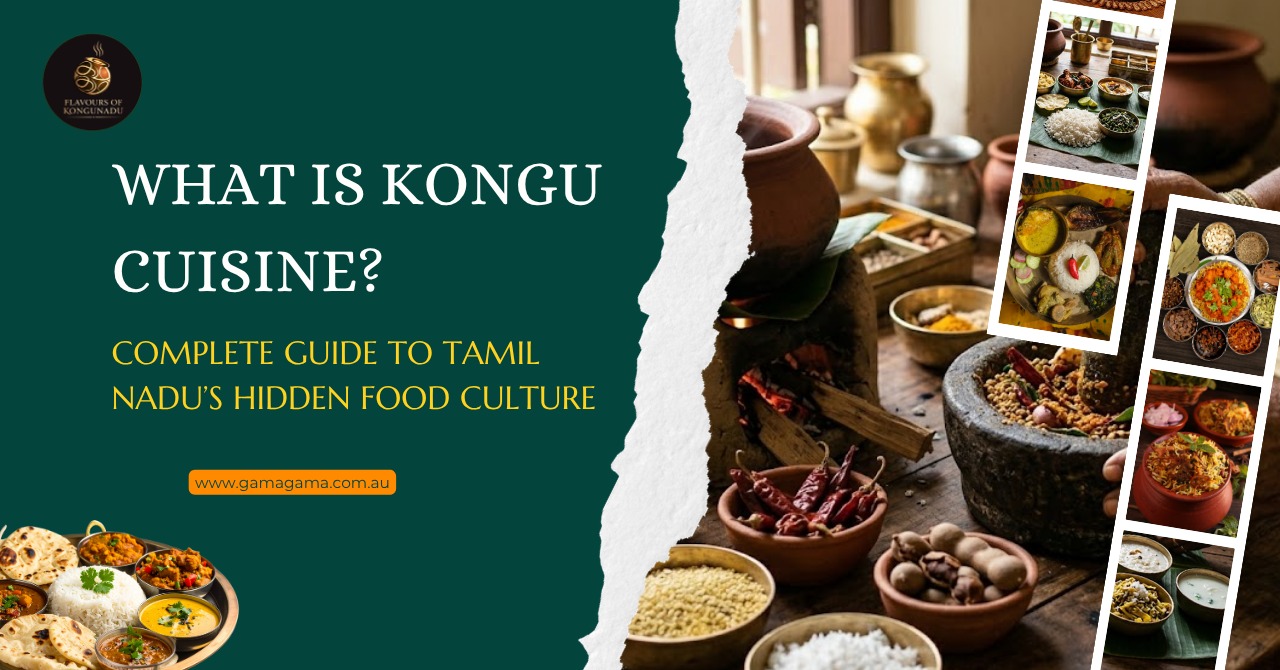
When people think about Tamil Nadu food, they often imagine idli, dosa, and sambar. But beyond these popular dishes lies a lesser-known yet deeply flavorful culinary world — Kongu Cuisine, now gaining popularity as authentic South Indian food in Australia.
Rooted in tradition and simplicity, this regional food style from western Tamil Nadu is slowly gaining attention for its unique taste and authenticity among food lovers searching for traditional Indian cuisine in Australia. If you are someone who loves exploring real, local food, this is something you shouldn’t miss.
Let’s dive into the story, flavors, and identity of this hidden food culture.
Where Does Kongu Cuisine Come From? | Kongu Food Tamil Nadu to Australia
Kongu Cuisine originates from the Kongu region of Tamil Nadu, which includes cities like Coimbatore, Erode, Tiruppur, and Salem — now widely searched by food lovers looking for authentic South Indian cuisine in Australia.
This region has a strong agricultural background, and that directly reflects in its food. Most dishes are made using locally available ingredients like rice, lentils, coconut, and freshly ground spices — a style now appreciated in Indian restaurants in Australia.
Unlike other regional cuisines, Kongu food focuses more on natural flavors rather than heavy spice or oil. That’s what makes it stand out in the growing demand for healthy Indian food in Australia.
What Makes Kongu Food Unique? | Authentic Indian Cuisine Australia
The beauty of Kongu food lies in its simplicity and balance. It may look simple on the plate, but the taste is rich and satisfying — making it popular among those searching for authentic South Indian dishes in Australia.
Here’s what makes it special:
1. Minimal Use of Spices
Kongu dishes are not overly spicy. Instead of strong masalas, they use mild spices in the right proportion to bring out natural flavors — ideal for those who prefer mild Indian food in Australia.
2. Fresh and Local Ingredients
One of the core elements of authentic Kongu food is freshness.
• Freshly ground masalas
• Locally grown vegetables
• Traditional oils like groundnut oil
Everything is prepared in a way that keeps the ingredients natural and healthy, aligning with the trend of organic and natural Indian food in Australia.
3. Coconut-Based Flavors | South Indian Cooking Australia
Coconut plays a major role in many dishes. It is used in curries, chutneys, and even dry preparations, adding a mild sweetness and texture — a signature element in South Indian cuisine in Australia.
4. Unique Cooking Techniques | Traditional Indian Cooking Methods
Kongu cuisine uses traditional methods like slow cooking, roasting, and steaming. These techniques enhance both taste and nutrition, making it a preferred choice for those seeking authentic Indian cooking in Australia.
Popular Dishes in Kongu Cuisine | Must-Try South Indian Food Australia
If you want to explore this cuisine, here are some must-try dishes:
• Arisi Paruppu Sadam (rice and dal combo)
• Kaalan (mushroom curry)
• Pallipalayam Chicken
• Nattu Kozhi Kuzhambu (country chicken gravy)
• Kambu Koozh (a healthy millet porridge)
These dishes represent the true essence of traditional Tamil food from the Kongu region and are now gaining attention in South Indian restaurants in Australia.
The Health Side of Kongu Cuisine | Healthy Indian Food Australia
One of the reasons why Kongu food is gaining popularity today is its health benefits, especially among people searching for healthy South Indian food in Australia.
The cuisine naturally follows a balanced diet:
• Less oil
• More fiber-rich ingredients
• Use of millets and grains
• Home-style cooking methods
This makes it a great choice for people looking for nutritious Indian meals in Australia without compromising on taste.
Why is Kongu Cuisine Gaining Popularity Now? | Trending Indian Food Australia
For a long time, Kongu food remained local and less known outside the region. But things are changing now, especially in countries like Australia.
1. Rise of Food Blogging
With the growth of social media, many food bloggers and YouTubers started exploring regional dishes. This has brought attention to hidden gems like Kongu cuisine and increased searches for authentic Indian food in Australia.
2. Interest in Authentic Food
Today, people are moving away from artificial and overly processed food. They are looking for authentic, traditional meals — and Kongu cuisine perfectly fits that trend of real Indian food experiences in Australia.
3. Restaurant Expansion
Many restaurants in cities are now introducing Kongu-style menus, making it easier for people to try these dishes without traveling. Restaurants like Gamagama Indian Cuisine are bringing this experience closer to food lovers.
More Than Just Food – A Cultural Identity | Indian Food Culture Australia
Kongu cuisine is not just about recipes — it reflects the lifestyle and culture of the people.
The food is:
• Simple
• Practical
• Rooted in agriculture
• Made with care and tradition
Every dish tells a story of the land, the farmers, and the community — something that food lovers in Australia are now appreciating as part of Indian food culture in Australia.
Final Thoughts | Authentic South Indian Cuisine Australia 2026
Kongu cuisine may not be as globally famous as other South Indian foods, but it holds a special place in Tamil Nadu’s culinary heritage and is now gaining popularity as authentic Indian cuisine in Australia.
From its natural ingredients to its balanced flavors, it offers an experience that feels both comforting and real. As more people discover this hidden gem, it is slowly getting the recognition it deserves worldwide.
If you truly want to explore the depth of Tamil Nadu food, don’t stop with dosa and sambar.
Take a step further — and experience the richness of Kongu food, now available through places like Gamagama Indian Cuisine.